19/03/2011

Background digging

Salamander Skeleton

Some species of salamanders have lost key elements of the skeleton during their evolution. For example, species within the salamander family Sirenidae have lost their limbs, and are eel-like in appearance. Remarkably, the numbers and shapes of limb bones are not necessarily the same within some salamander species, as is the case of the red-backed salamander (Plethodon cinereus) of North America. Within the same population, individuals of this species can have varying numbers of limb bones, and these structures can vary significantly in size, shape, and degree of calcification.

Salamanders have a protrusile tongue, used for feeding and sensory purposes. Many species are very brightly colored, usually to warn predators of the poisonous nature of the skin of these animals. Some salamanders secrete a chemical known as tetrodotoxin from their skin glands This is one of the most poisonous substances known, and it can easily kill predators that are intolerant of the chemical, as most are.


http://science.jrank.org/pages/5936/Salamanders-Biology-salamanders.html

08/03/2011

Sketching intiated

Salamandor

Salamandor lives in an overpopulated swamp deep in the forest. The competition for food is fierce and being the only salamander here he has had to undergo a drastic evolutionary change to survive. Salamandor has grown a carnivorous-like flower on its back which uses its bright colouring to attract food that gets absorbed through this flower and into the stomache. This explains why its snout is so small, because it has no need of a mouth when food comes straight through the flower. The flower also creates great camouflage for the salamander as there are many others like it around the swamp surface and surrounding area, so it is easier to hide from predators.

03/06/2010

Final project photos


:bg.jpgLight Wings

By Jisook Moon and Lessa Morfee

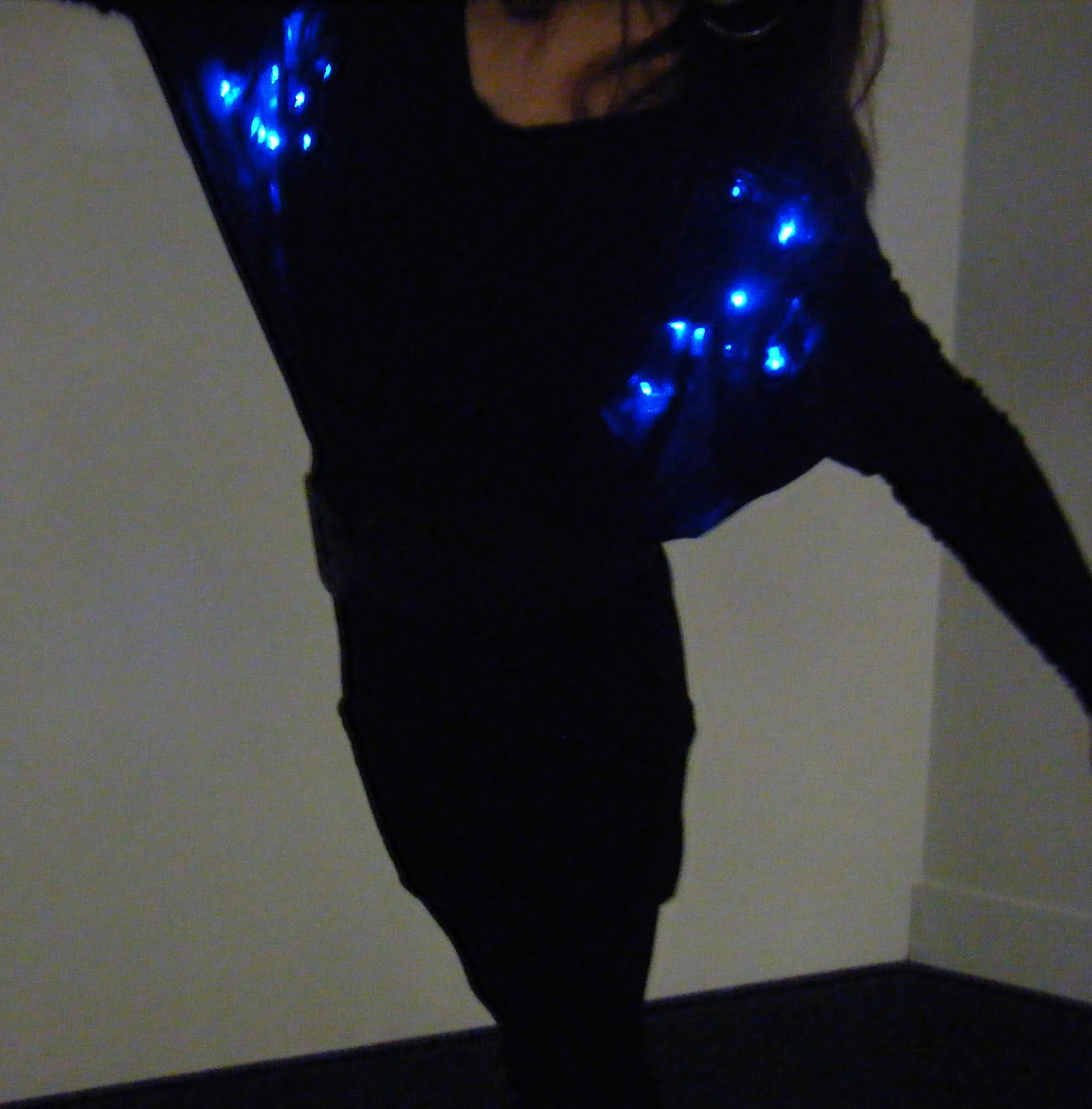
The idea of flying and the aesthetic beauty in swarms of fireflies inspired this dress that has electronic components incorporated into it. There are bright blue lights on the wings below the arm on each side, which gently fade in and out according to the flapping movement of the arm. The black dress contrasts well with the blue lights and immerses you into the magical environment the lights create. This dress is ideal for people who want a special elegant dress or for a performer who would enjoy choreographing with these light enabled wings. Get your best shoes out, put on this dress and take flight!

Light Wings works by sticking the LED’s into the material underneath the arms and connecting those to the Arduino Lilypad through a resistor. The LilyPad is powered by a battery pack that holds three AA batteries that also sends power to all other components. There are also two bend sensors sewn in the pit of the arms that determine when the LED’s dim or become brighter. After programming the LilyPad to adjust the lights to dim in and out according to the data from the bend sensors, all components are soldered together and neatly hidden within the dress.